New year, same commitment to the necessity of community
Hi friends,
2025 is off to a rough start. Even if we expected it, the reality is jarring. Thankfully, there are so many resources and practices we can use to keep ourselves present and feeling, stay grounded, and be in relationship with each other.
The shock machine is hard at work. We can pay attention without being harvested by it. We have to work to respond, not react. We can choose to engage our survival skills of joy, connection, care, and imagination.
At Next River, we are reaching for the support, expertise, and wisdom of our community—the constellation of humans with whom we partner and co-conspire. The work we are dedicated to—reshaping national beliefs and practices of freedom in the United States—is fundamentally collaborative.
Today, we are introducing you to Mariah Rankine-Landers, an educator, interdisciplinary artist, and co-author of Do Your Lessons Love Your Students: Creative Education for Social Change. We have been working closely with Mariah to develop a curriculum for Freedom’s Revival.
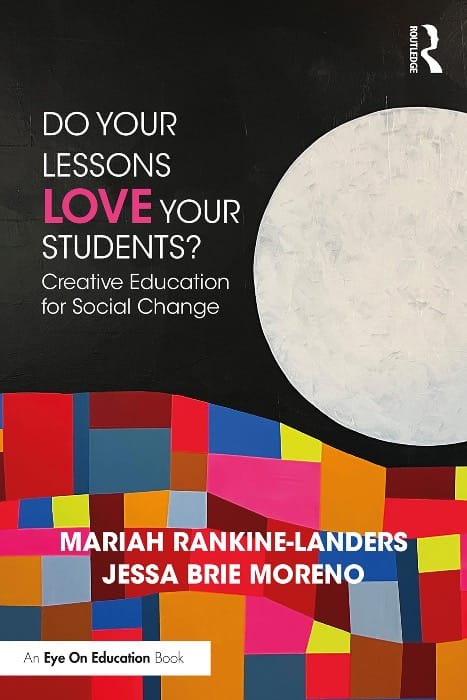
Mariah stands as a transformative figure in education, pushing beyond conventional norms to cultivate a space where creativity and social change are at the forefront. With an educational philosophy deeply embedded in equity and social justice, Mariah’s creative work weaves an educator’s sensibility with the purpose and directionality of a cultural strategist, creating experiences and learning journeys that guide toward liberatory transformation.
Next River team member, Madeline Davis sat down with Mariah to talk about her path into this work, and how she embeds liberation into her approach.
Getting to know Mariah Rankine-Landers
Tell me about your practice and the path that led you to it.
I come from so many teachers on my mom's side that, back in the 70s, they gave us an award for having the most teachers in one family in the state of Michigan. When I learned that, I thought, “Oh, the saying is true: you grow where you're planted.” It was unavoidable. It's really in my blood to be an educator.
My college background was in cultural and medical anthropology. And then when I needed a job out of college, I decided to get my teaching credential because I knew that world so well. I fell in love with teaching because I saw that supporting minds to grow and develop is a beautiful way to make change in the world.
I taught Kindergarten and First Grade for 12 years, followed by eight years as a county education administrator, directing a pedagogical training program for teachers. I was known for my pedagogical practice in the arts, creativity, and culturally responsive teaching.
Now, I am the co-leader and co-executive director of education consultancy group Studio Pathways, and I’m also a consultant for large-scale projects like this one with Next River. I work with political change-makers, thought leaders, and organizations that want to make strategic social change through pedagogical practices, ways of learning, and the advancement of narratives that inform new ways of being on the planet.
You mention that creativity and cultural responsiveness are known features of your work. What do you mean by those terms? Why do you think they’re important?
I believe that every human holds sparks and seeds of creative process in them. I think the universe is a creative process, and I see value in each human as a part of it. Everyone has the ability to creatively engage with the world by diverging from ways of being that might be limiting; exploring the world with openness, with excitement, making connections and meaning for themselves. Creativity is endless.
When we add culture to the mix, we understand that our creative thinking is framed within our cultural context. Meaning-making is much easier when it is situated within the cultural frames that grew our awareness. But creativity also allows us to migrate across cultural contexts and boundaries, making it universal.
How do you see your work as liberatory? How does your education, learning, and curriculum work intersect with conceptions and practices of freedom?
Expanding the mind is liberatory work. As a classroom teacher it was my responsibility to holistically support children as they develop their awareness—through the ability to read and comprehend, to understand the language of math, to know history and art, and to deepen critical thought. Education, learning and curriculum are companions of liberation. As we emancipate the mind (from limited knowledge sets or limiting narratives) we increase our opportunities to understand and engage with the world, as well as to change it. Education is always political in this way.
The more we can expand the range of our thinking, the more we experience and understand the fullness of freedom. Creative practice and artful thinking lead to liberatory ideas by nature. When I teach, facilitate, or design frameworks, systems of practice, and curriculum, I always ground in the purpose of evolving conscious thought toward a world in which we all can be well.
How do you approach curriculum development for a concept like interconnected freedom?
I bring in cognitive science, neuroscience, and all of the pedagogy I understand to build out frameworks and practices that can codify this understanding of freedom. I work with what we currently know about how our brains work to make meaning: how neurons wire and fire together and how information gets encoded for long-term memory and retrieval.
I'm also thinking about how ideas are revealed to the learner. People come with their own wisdom and knowledge. It is really beneficial for them to feel their strength and know that they already have access to the information they're about to learn, because it makes that information stickier and more resonant.
The key to developing curriculum for a topic like interconnected freedom is to bridge context with imagination. By “context,” I mean connecting experiences in which I have felt and understood this freedom in my own life. When I bring those experiences into the place of imagination, I am able to compose a learning experience that invites participants to do the same: bridge their knowledge of interconnected freedom with the capacity to imagine a world in which that form of freedom is centered.
Any final thoughts?
We have the ability to make room for the creative aspects of our humanity to emerge and help us get to the future place where we are all well together.
Mariah’s current inspiration
- My recent trip to the Northern Territory in Australia. I had the privilege to be introduced to the land by Aboriginal artists and elders, which offered the experience of not having the Western gaze with me. It was extraordinary, and remains really present in me as I continue to create.
- I was also in New Zealand recently, and had the chance to spend time with Maori artist Michael Parekowhai. Michael is addressing, rooting in, and moving beyond culture in a way that I've never seen or experienced. I'm still sitting with the lessons I've learned from him because I had some really deep, quality time to talk and learn from his practice and to see his work in process.
- I’m fascinated by the Telepathy Tapes right now. It’s a podcast about children with nonverbal autism having the capability to use telepathy to communicate. As the sibling of a verbally limited person, I grew up witnessing and supporting children with special needs. There are too many encounters to name, but I believe that our nonverbal children do have this ability and that we can practice and understand consciousness through their insights.
- I love Norma Wong’s insights and process for future change. She was interviewed by my friend Miko Lee recently about her latest book When No Thing Works: A Zen and Indigenous Perspective on Resilience, shared purpose, and leadership in the timeplace of collapse.
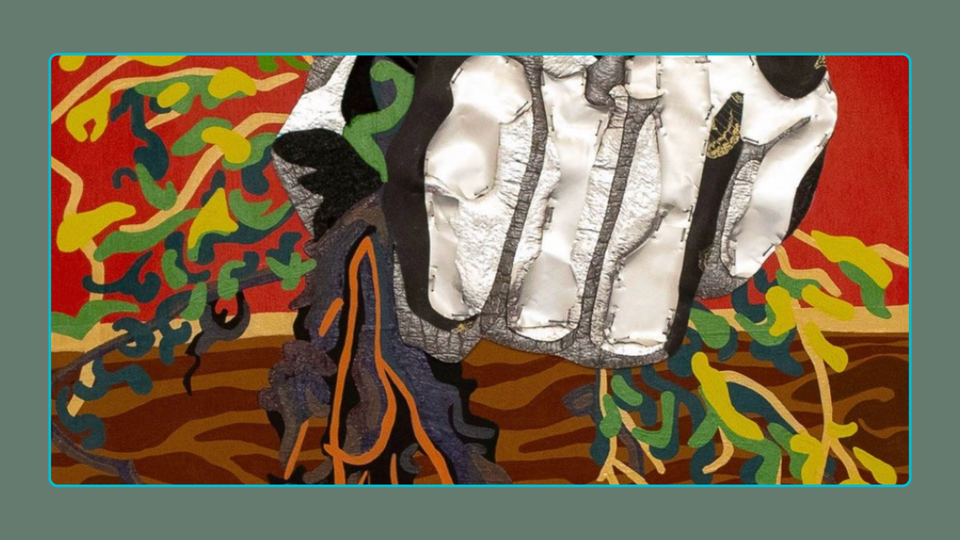
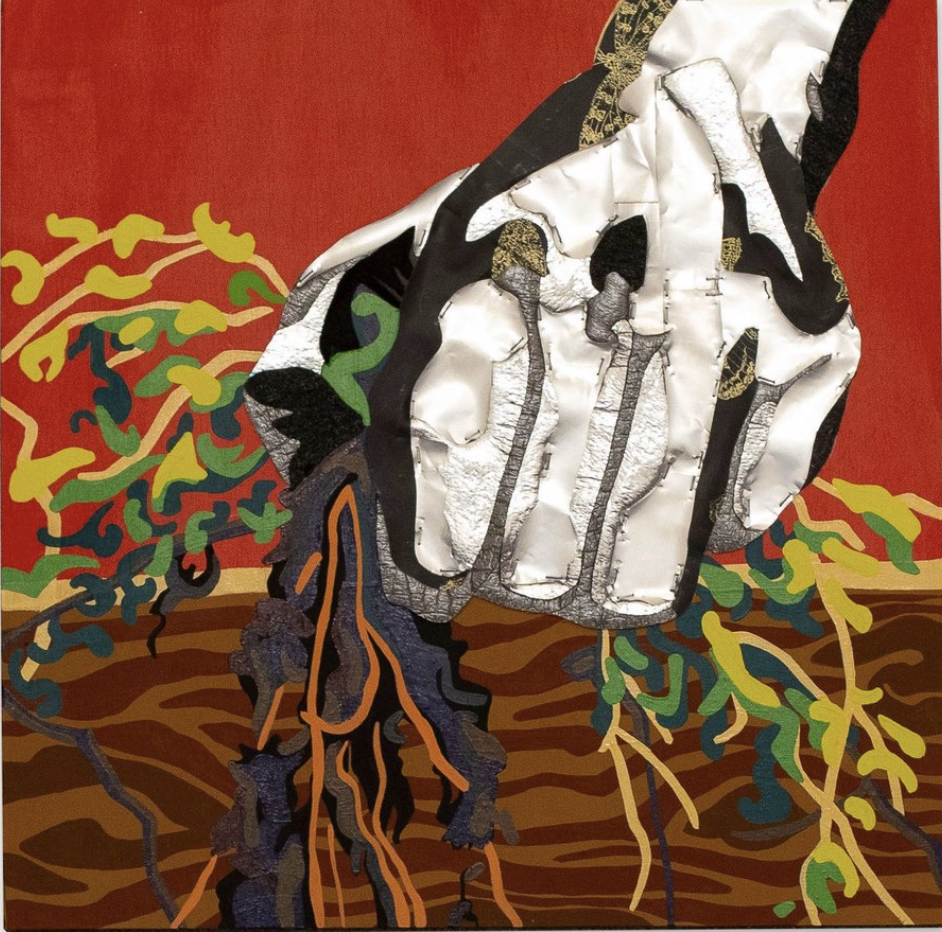
- Lastly, I’ll share that I’ve been incredibly moved by the artist Stuart Robertson who is a Jamaican-born American. The images and depictions of Jamaica resonate through the colors and textiles, which he incorporates with aluminum. Jamaica is known for its bauxite ore—which holds the compound for aluminum. (Editor’s note: see his beautiful mixed-media piece featured above.)
To work with Mariah or learn more about her services, check out her
website or email her at mariah@mariahlanders.com.
Next River updates
Free in-person workshop
Are you in the California Bay Area and interested in the experiential workshop Mariah has designed for us? Save your spot in a free two-hour workshop Saturday, February 8th from 10am-12pm exploring collective liberation.
Join our team
Over the last few years, we have built a strong organizational foundation financially, strategically, and culturally. We have a stellar team in place and are looking to grow.
We are currently hiring a Managing Director Learn more here.
Recommendation to start the year
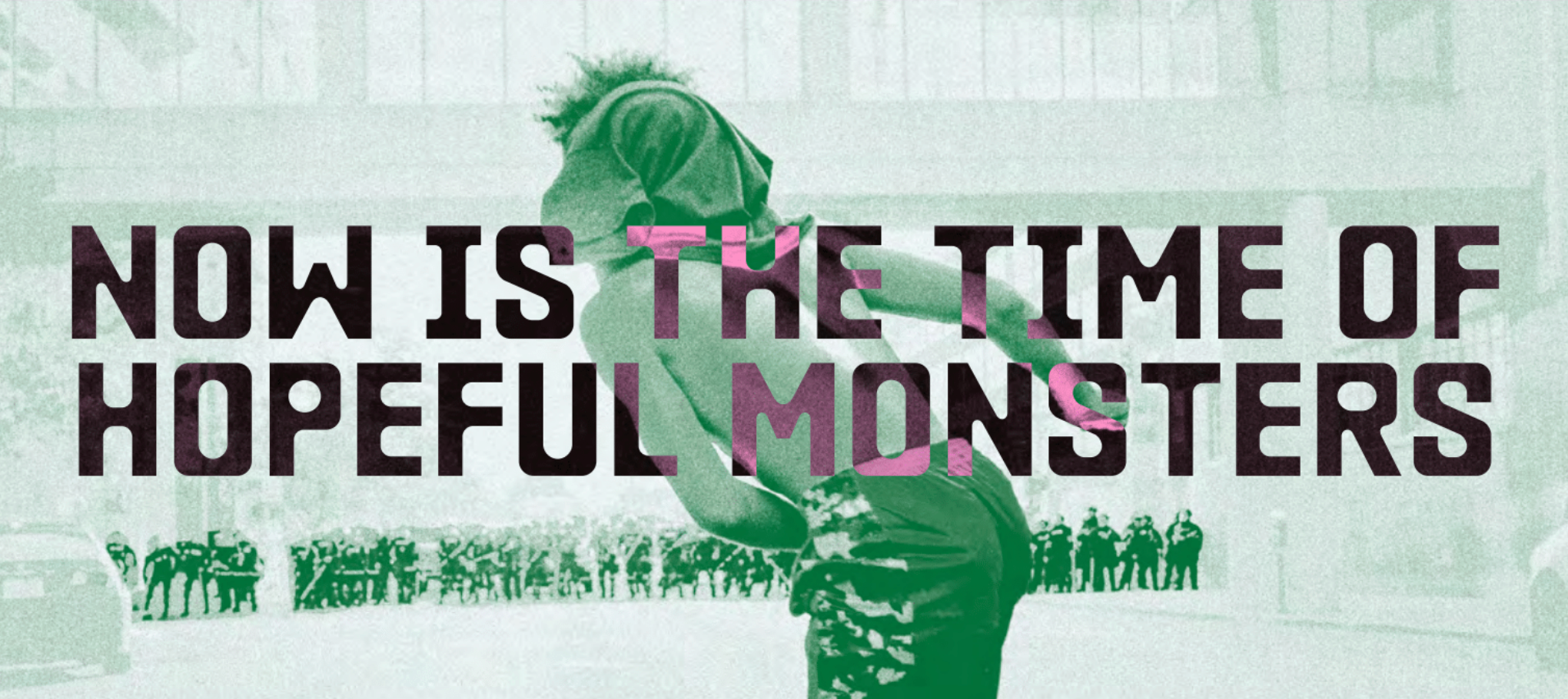
Next River partner, Future Currents, has published a report on maximizing power and solidarity during movement upsurges. Check out Hopeful Monsters: Movement Upsurges, Mass Protest, and Solidarity in Flux, because (as Future Currents remind us)…
Member discussion