Ways to tap into a familiar freedom
Hi friends,
With spring’s arrival, we have a few bright and hopeful things to share with you. Read on for some research insights that surprised us in a good way, a conversation Mia had on the Break Fake Rules podcast, and an invitation to join us for a Freedom’s Revival workshop in the coming months.
But first, we’re excited to share that the Berkeley Dance Project at UC Berkeley will be performing a piece, called Freedom is a River, based on our field guide in Berkeley next week! Any of you in and around the Bay should come check it out.
Research on a familiar freedom
When we talk about Freedom’s Revival, we know how ambitious it sounds—changing Americans’ understanding and practice of freedom is an enormous undertaking. It almost sounds impossible–almost. But culture is always changing, and it can happen in the direction we want. (Overindexing on pragmatism isn’t benign, as we unpacked a couple of years ago.)
Freedom and independence have been so tightly linked in this country’s foundational narratives that disentangling the two unravels something deep and structural in the cultural psyche. As well it should, frankly—the American way could use an overhaul. But, due to the longevity and entrenchment of the ‘freedom as independence’ myth, we always figured it would take some time to stoke the appetite for another, perhaps unfamiliar freedom.
Last fall, we worked with Voss Research & Strategy to gather insights on what Americans believe about freedom right now. Our assumption going into this research was that people’s beliefs would reflect an individualistic framework for freedom—the kind in which a person can do what they want, without restriction or accountability. But it seems we were wrong. From the sample of 1,000 adults we polled, we learned that Americans are much more primed to recognize the interdependent nature of freedom than we thought.
The fact that our freedom is linked—that our own wellbeing, destiny, and agency are bound up with everyone else’s in this common project we call society—is something we already know. It’s not a new conception of freedom at all. Hyperindividualism is the conditioning, not the instinct. The knowledge of interconnected freedom lives deep within our bones. To get at folks’ understanding of freedom, we applied our line of questioning to four different dimensions:
- Accountability: To what extent does personal freedom depend on being accountable to each other to create the conditions where everyone can live safely and thrive?
- Contingency: To what extent does personal freedom depend on other people also being able to have their own personal freedom?
- Society: To what extent does personal freedom depend on living in a society that ensures no one is left behind and everyone’s needs are cared for?
- Solidarity: To what extent does personal freedom depend on solidarity and mutual care with others rather than individual independence alone?
Our research found that a majority of Americans define freedom using an interconnected framework rather than an individualistic one—a tendency that is maintained across all four dimensions to a greater or lesser degree.
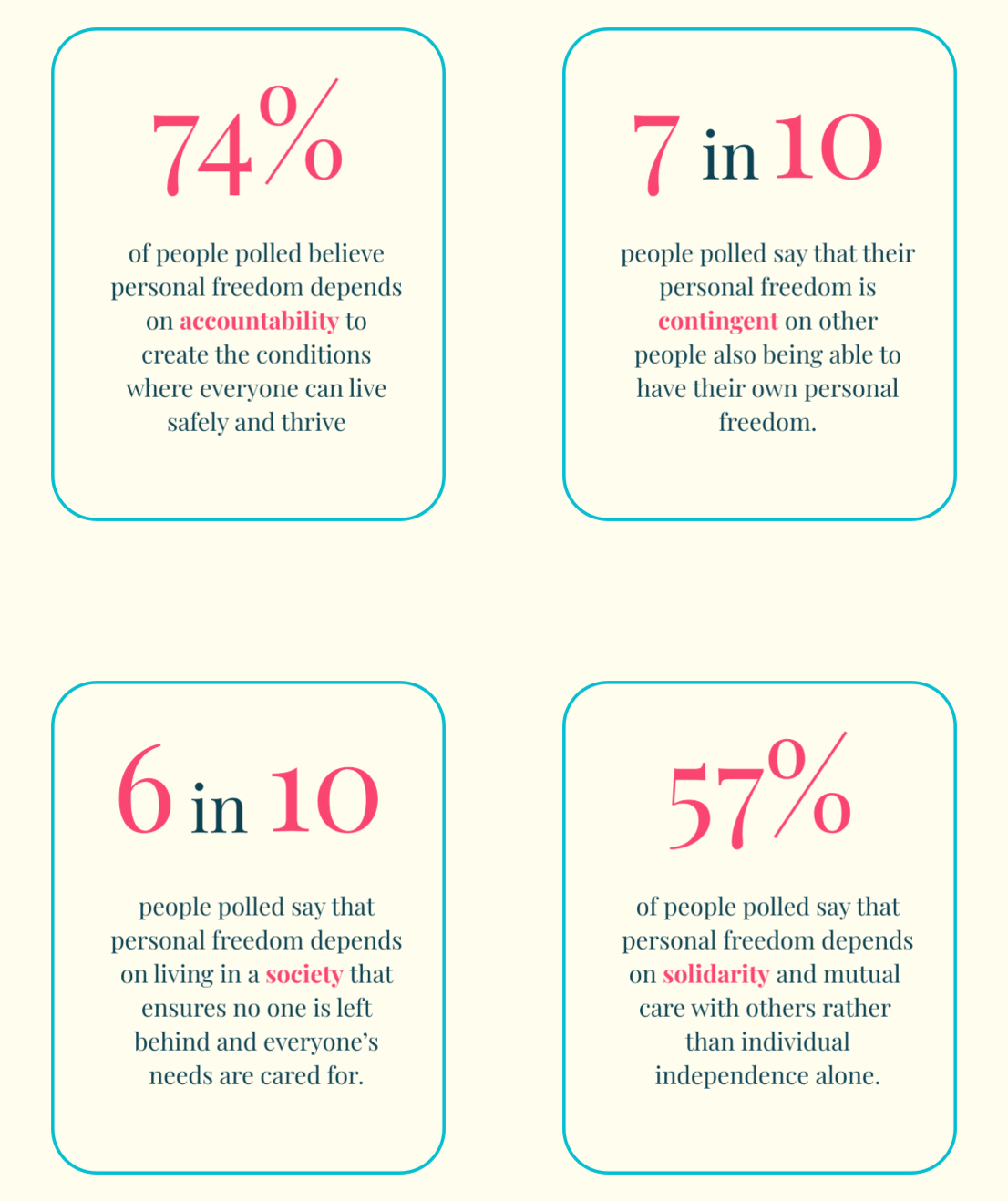
Even the smaller majorities we see in the data are critical information: the individualism that seems so bound up with the American conception of freedom is in tension with the interconnectedness most of us recognize as essential. We should let that buoy us. Our work is not to introduce American culture to something new, but to stoke awareness of something we each already know to be true.
It turns out most of us don’t need to be convinced of our interdependence. But we do need to learn how to reorient ourselves, our lives, and communities toward it. The knowledge of interconnected freedom may exist within us, but it’s up to us to figure out how to lean into its instincts.
And that’s where Next River has a powerful offering…
Lean toward liberation
Freedom is a praxis we can claim—even while we exist within an unfree society. In the coming months, we are hosting a number of public workshops (virtual and in person) where participants will have the chance to deepen their recognition and adoption of the liberatory practices we need to build a freer world. Join us! Next River’s Freedom’s Revival workshops introduce the framework of interconnected freedom and its four elements: mutuality, pragmatic faith, embodiment, and transformation. The workshops lean into somatic practices and connected experiences that help participants to unearth their own inherent knowledge of interconnected freedom, attune to it in their lives, and locate their work within it.

Mia’s Break(ing) Fake Rules
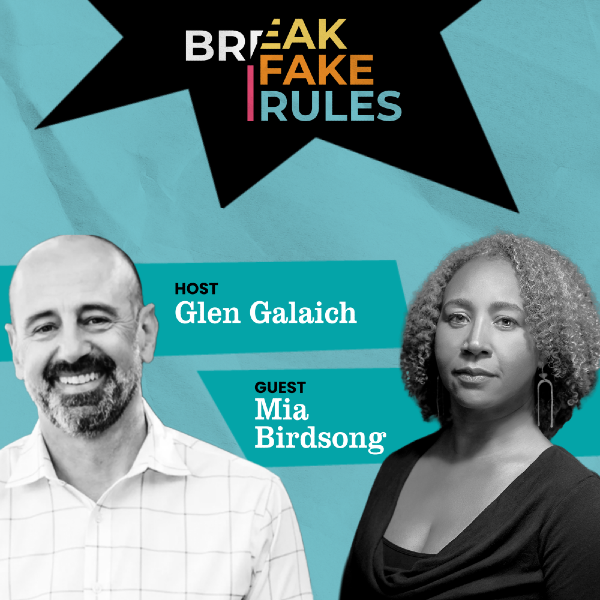
Last month, Mia sat down with Glen Galaich (CEO of the Stupski Foundation, Next River board member, and general friend of the org) on the Break Fake Rules podcastto interrogate the deeply embedded cultural narratives of individualism, self-reliance, and separation, and what they cost us. Mia shares nuggets of wisdom directed specifically to the philanthropic community, challenging assumptions about what long-term investment should look like.
Current inspiration
This lovely book of romantic tales.
This rad set of portraits and interview.
This reminder to embody the work.
This big, old friend.
A poem to take with you
An Old Story
Tracy K. Smith
We were made to understand it would be
Terrible. Every small want, every niggling urge,
Every hate swollen to a kind of epic wind.
Livid, the land, and ravaged, like a rageful
Dream. The worst in us having taken over
And broken the rest utterly down.
A long age
Passed. When at last we knew how little
Would survive us—how little we had mended
Or built that was not now lost—something
Large and old awoke. And then our singing
Brought on a different manner of weather.
Then animals long believed gone crept down
From trees. We took new stock of one another.
We wept to be reminded of such color.
Member discussion