Liberatory movement with Sarah Crowell
Hi friends,
Freedom is a river
A baptism,
deep grief,
unbridled joy,
connection, nurture, flow
The river has voices,
identities,
memories
When river meets sea, it does not end
It transforms…
– excerpt from “Freedom is a River”, Berkeley Dance Project 2026
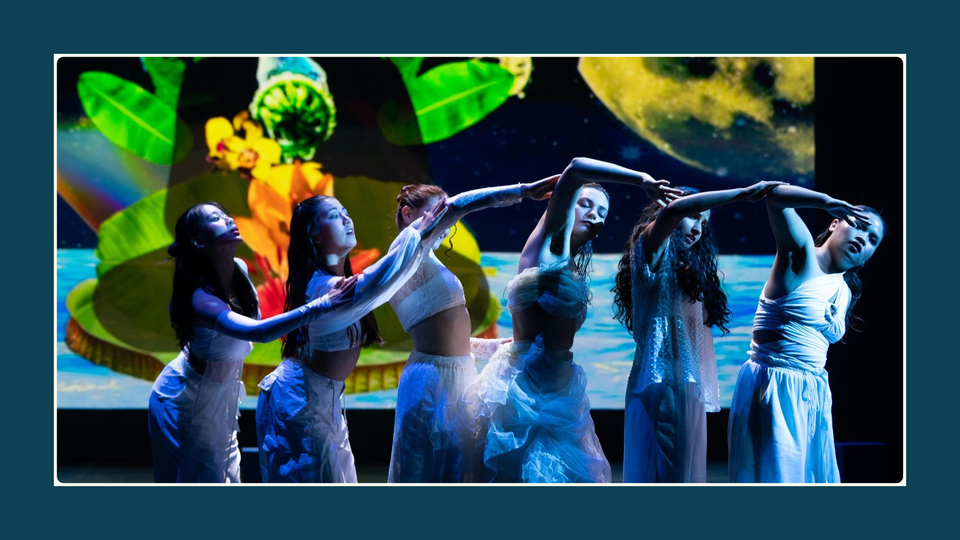
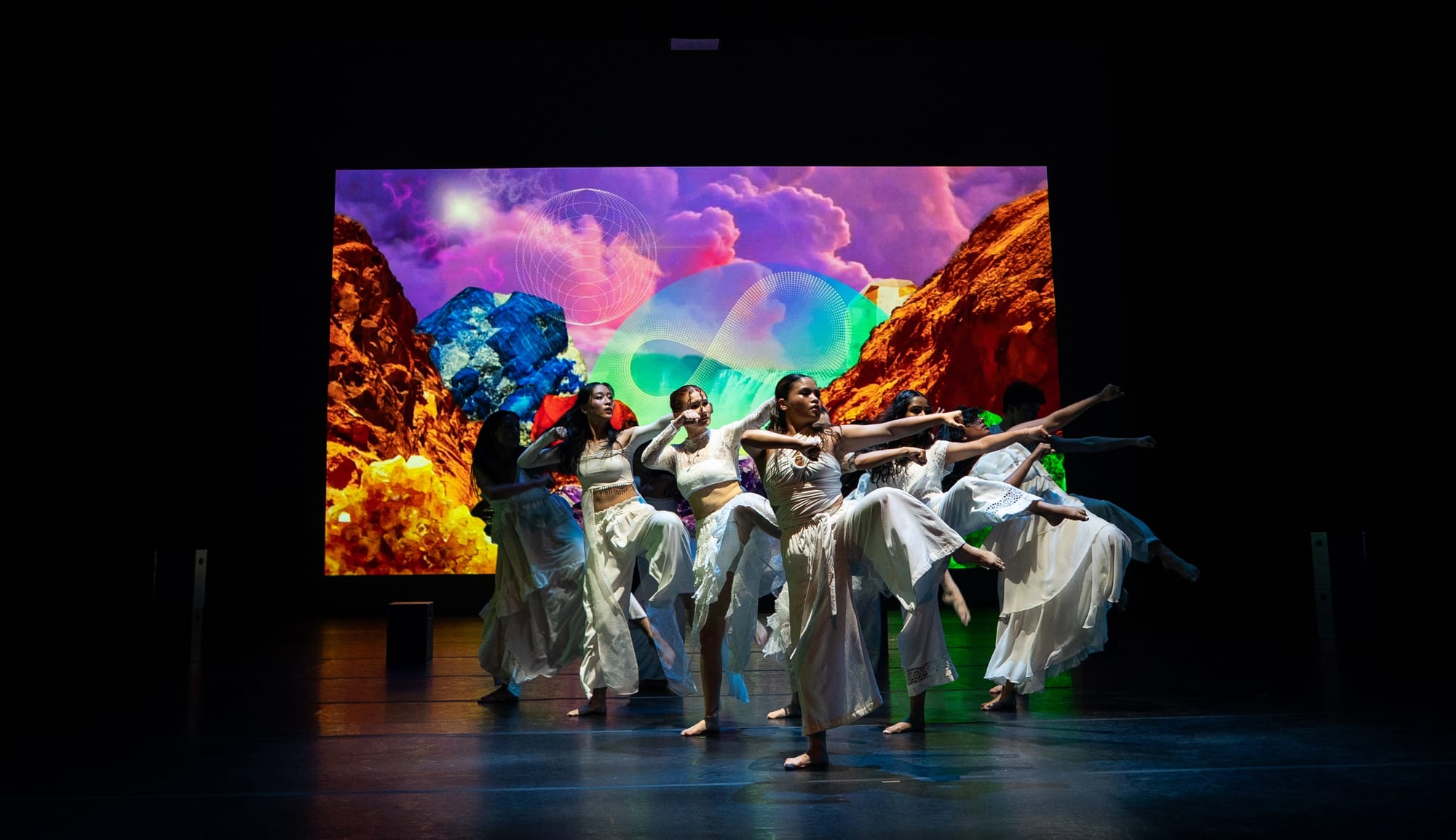
Earlier this month, a group of UC Berkeley students presented “Freedom is a River,”a rich, multi-media performance, as part of the Berkeley Dance Project’s end-of-year show. Inspired by Next River’s Freedom’s Revival field guide, the piece was co-directed and co-choreographed by one of our magnificent workshop facilitators, Sarah Crowell, along with Lisa Wymore, Professor of Theater, Dance, and Performance Studies at UC Berkeley. “Freedom is a River” wove the languages of dance, poetry, music, and dynamic visuals into a story of awakening, capturing its audience in the current and bringing us into the ongoing practice of freedom.
Watching this group of talented young people imbue our Freedom’s Revival framework with their own depth and perspective was a reminder of the nature of Next River’s work. Our role is to scatter, plant, and water the seeds of liberatory transformation—but that does not mean we know exactly what will grow. Thank you to the Berkeley Dance Project for nurturing this kernel of interconnected freedom into something beautiful and profound.
We spoke with Sarah to learn more about the process of creating this piece, as well as the spirit that went into it. The full interview and more details from the show are below. But before we dive in…
Don’t miss Mia on Becoming The Vision
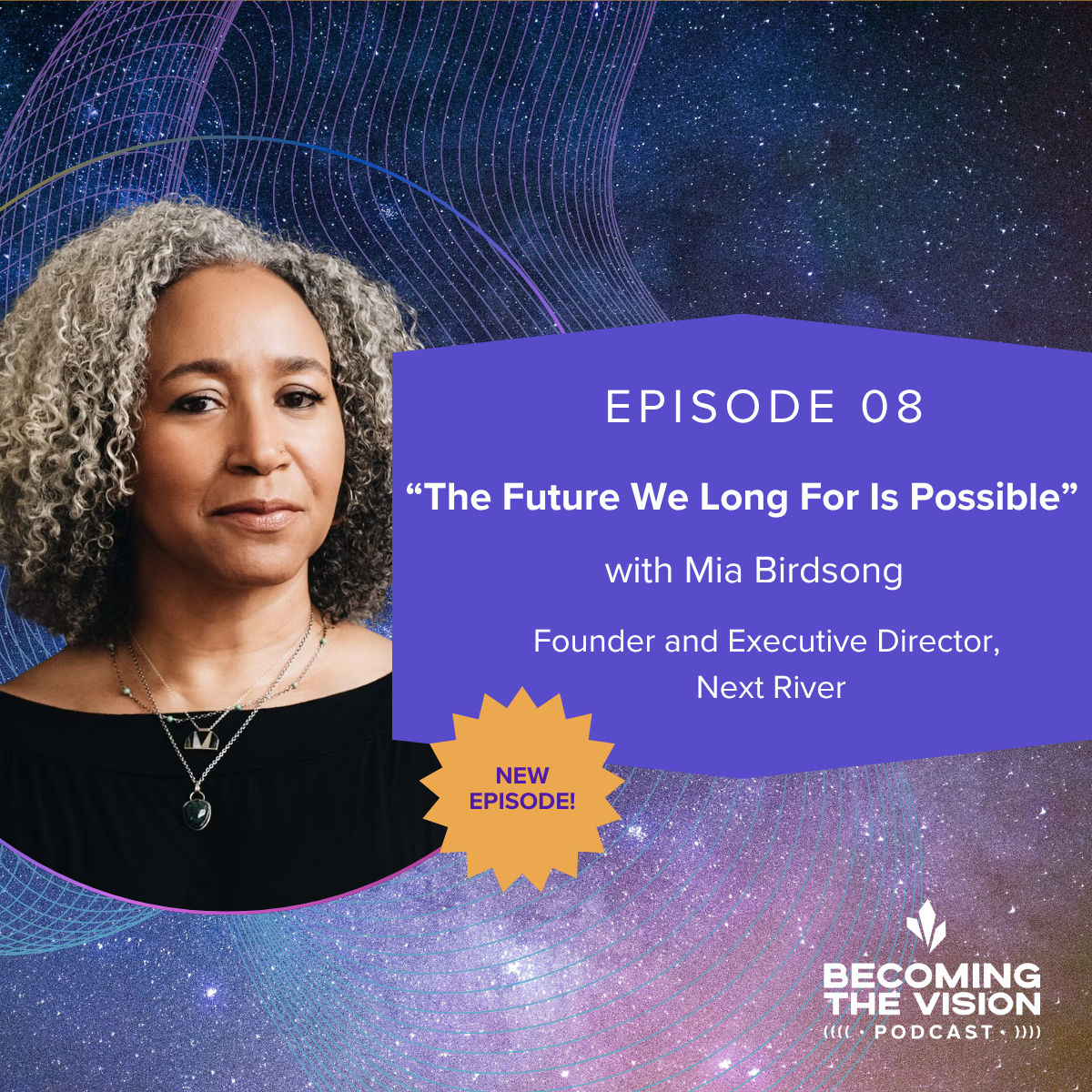
Hosted by Dr. Chera Reid and Dr. Trinel Torian, Becoming The Vision is the podcast of Freedom Dreams in Philanthropy, a collaborative dedicated to imagining what centering racial justice can mean in the social sector and philanthropic institutions. This conversation between deeply aligned minds and spirits digs into Next River’s origins, Mia’s journey to founding it, and what it looks like to create room inside organizations for the world we want. They also get candid about what it means to practice freedom in an unfree world, what that work requires of us, and how community carries us through.
“We actually could have something better. We could have something
that’s actually good. We could have something beautiful and life-affirming—
and we don’t have to do it by ourselves—if we release the lie that is the safety of the familiar.”
Freedom moves with Sarah Crowell
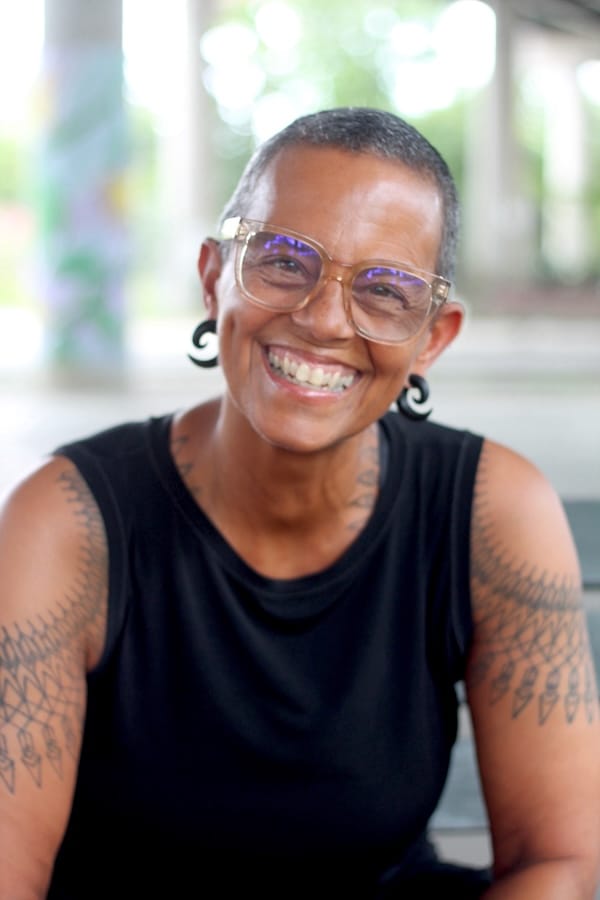
In addition to being a long-time Next River facilitator, Sarah Crowell is an award-winning dancer, choreographer, arts educator, and nonprofit leader who creates powerful collaborative experiences through movement, intimate storytelling, and scathing political commentary. We are proud and inspired to see how she and Lisa expanded our vision for interconnected freedom with these dancers at Berkeley Dance Project. Read on for some insight into the making of “Freedom is a River.”
This interview has been lightly edited for clarity and interspersed with excerpts from the “Freedom Is a River” dancers’ poem.
Can you share a little bit about yourself and your work?
My background is in dance and theater. I danced in companies for 15 years, had my own dance company for six of those years, ran an art center for young people in Oakland called Destiny Arts Center for 30 years … I'm 100 years old now.
I really love to share Destiny's mission. It's “to inspire and ignite social change through the arts.” I think that really encapsulates what I do. Through storytelling, movement, theater, song, and community collaboration, I co-create productions that don't just come from me. I often work with other co-directors, like for this piece, [“Freedom Is a River”]. But also, the performers are collaborators with me—they're telling their own stories, they're innovating their own movement, they're playing with the content.
It’s important to me that the process is collaborative, iterative, and original. That we get to play with each other, and that everybody participating feels honored and connected.
I ask myself and my co-directors, “How do we pull out the authentic movement of each dancer? How do we make sure they are not silent? How do we make sure they have a connection to the theme?” Because then the performance is stronger. It’s dope when performers understand what they're doing. They express themselves in a different way on stage, right? If it's just my idea and I'm putting it on your body, it's different.
What are the origins of “Freedom is a River,” and could you talk about how it came together?
Lisa Wymore, who is a dance professor at UC Berkeley, engaged me. She’s an amazing collaborator. She came to me saying, “I want to do a piece with you. We can do it on anything.” And then we had months of conversation. We’d talk weekly to riff on stuff. And one day I was like, “You know what? We're moving in the direction of Next River’s work.”
I had already been wanting to do a piece about interconnected freedom. I really, really love this work. I've been embodying the framework with people during the workshops I facilitate, so I feel connected to the content in a really intimate way.
I told Lisa we could use the four elements of interconnected freedom as scaffolding for the piece. And she was like, “Hell yeah, let's go.”
My favorite way of doing these wildly creative collaborations is to have a good container around everything. The interconnected freedom elements became the container for this piece.
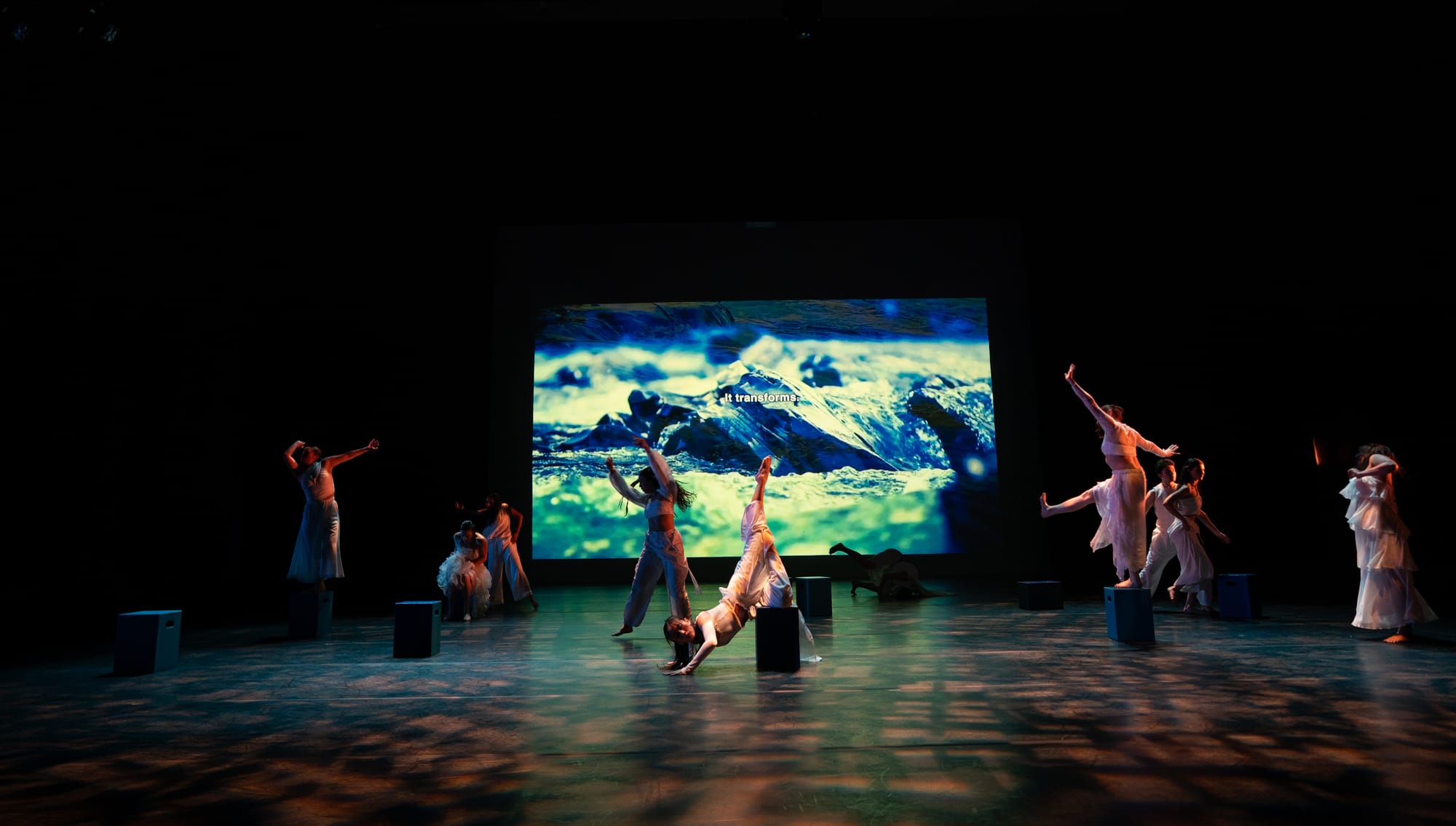
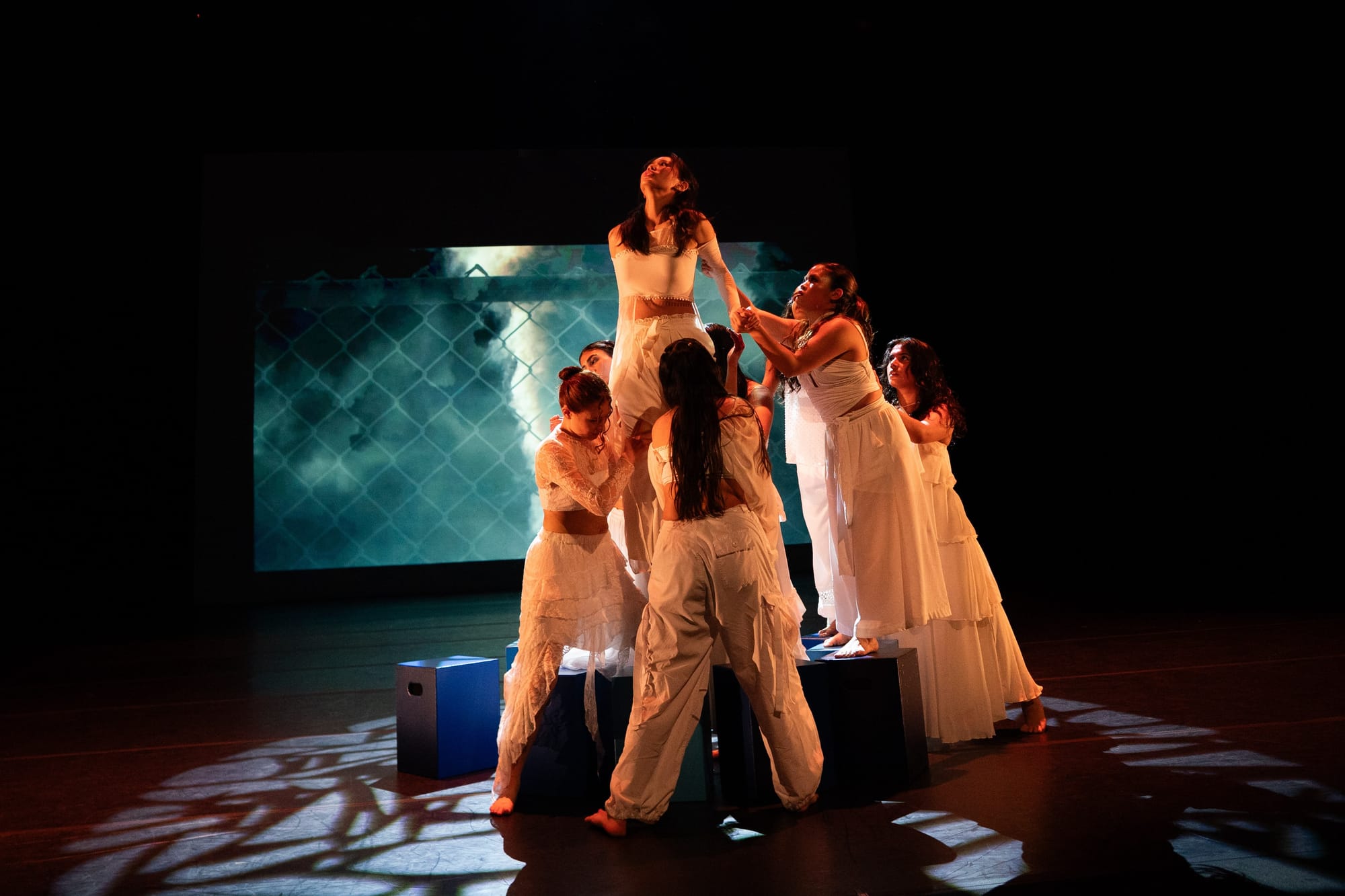
In the opening segment of “Freedom Is a River,” the river is flowing. But then it gets dammed by an attitude of: “I'm alone, I'm not connected to anyone.” Dammed by rugged individualism.
We stand alone
and call it freedom
We turn our backs
and call it strength
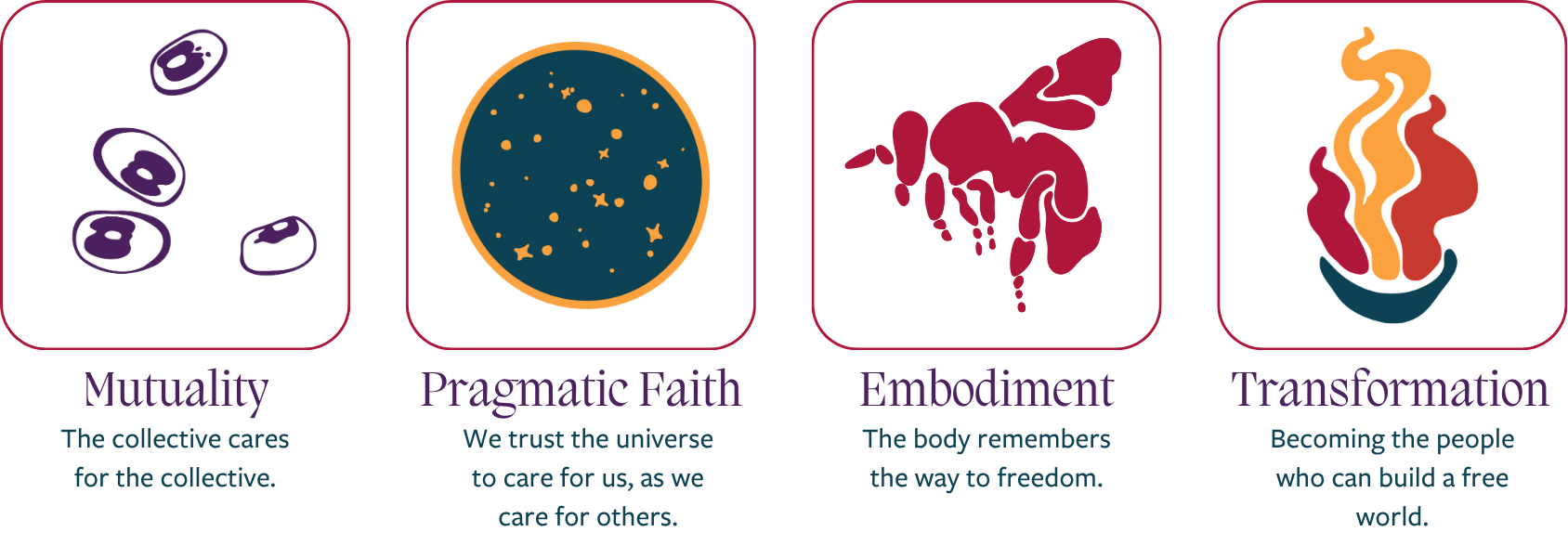
Mutuality breaks through: people are leaning on each other, we're not tit for tat, we're generous with each other.
But I do not have to earn
my place in the water
I am already held
And then the next dam: “I’m going to ignore the people downstream, I’m just going to take care of myself,” which comes before we get into pragmatic faith. Pragmatic faith is about taking care of the ones that we may never meet. Planting the seeds, even though we might never sit under that tree.
I will never meet you
Still
I leave something for you
Clean water
A path
A possibility
I act
as if your life
matters to mine
Because it does
And then the dam that says, “My body doesn't matter,” before going to embodiment.
I forget that my body
is a river
I forget
that it carries
truth
And without it
I cannot feel
where I belong
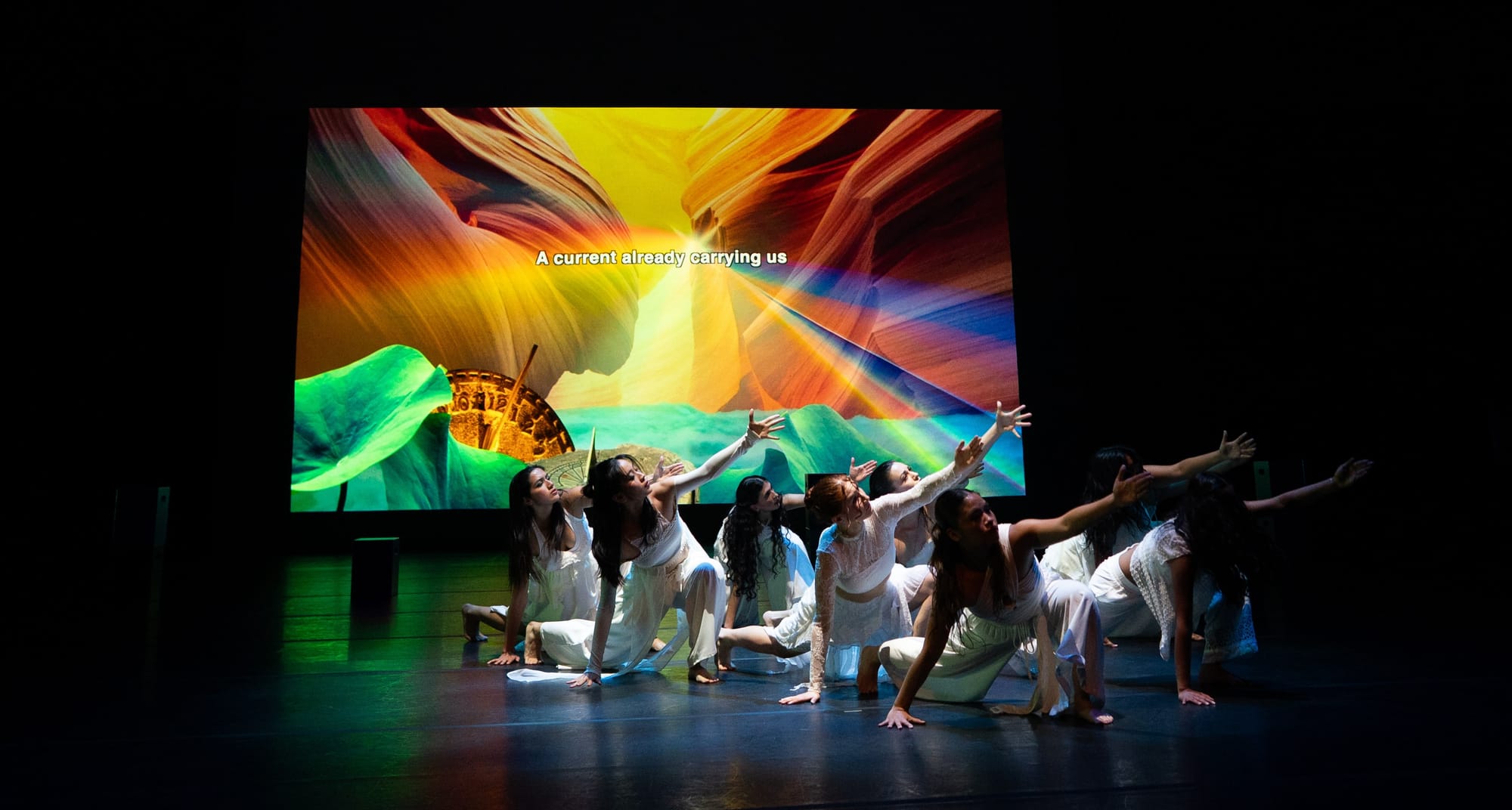
The embodiment segment is to a song, my favorite, called Worship by Jon Batiste, and it's a hip hop piece. Hip hop is the most Afrocentric form that I've studied and taught. And, to me, Afrocentric movement does the best job of connecting us to the earth.
The final dam is before transformation: “I need to shut all that out, it got too big, I don’t want to be that vulnerable.” It goes from this ecstatic embodiment piece to a softer, more heart-opening piece of music—this part’s an invitation. The students really understood that transformation is a journey. We are leaning in the direction of transformation—we’re not there, but we can move toward it together.
Freedom is a river
Freedom is not a place we arrive
It is a way we move
Talk to me about embodied knowing—why is the body such an important site of liberation?
It's such a good question. But also, for dancers, we’re just like, What? How could that even be a question? Because it's so obvious to us.
We've been disembodied by patriarchy, by white supremacy, by heteronormativity—all of what I would call the egoic systems disembody us. They don't empower us to be present in all the levels of our being. But in order to be free, I believe we need all the parts of ourselves. We need mind, body, and spirit to be free.
When I'm in my full, authentic expression as a mover, that's when I'm most free. And I would say that most people, when they move—you don't have to be a trained dancer—when we’re really moving authentically, we're most free in that place.
There’s this researcher, his name is Sir Ken Robinson. I love this guy. He talks a lot about the hierarchies in education, including in the arts. When funding gets tight in education, they cut the arts, right? They always come for the arts first. But which of the arts do they come for first? Dance. They always come for dance first. I think that’s because of fear of the body, fear of the power of an embodied expression. You know, so many people say the artists are the ones who get attacked first in repressive regimes. The dancers are the lowest-paid artists, and the ones they come for first. All we need is our bodies. We come with the whole package right here. And it's terrifying for repressive regimes, for people to be empowered in their bodies. Because when you're dancing free, you ain't afraid of shit.
Keep up with Sarah’s work on Instagram, Facebook, or any of the following communities where she channels her magic:
Moving Joy
Dance Mission Theater
Liberation Academy
Movement Liberation
Belonging Resident Company
You can also get a taste of Sarah’s unfettered, embodied freedom by joining a Next River workshop. She’ll be facilitating one in Oakland in just two weeks.
Freedom’s Revival Workshop (Oakland)
Sunday, June 14, 2026
10:00 AM - 12:30 PM
Groundfloor
4055 Telegraph Ave
Oakland, CA 94609
ADA Accessible
Current inspiration
This collection of delicious recipes.
This catchy slogan.
This roundup of Pope Leo XIV reactions.
This perfect video.
Member discussion