Imagining beyond the American project
Hi friends, We’re a week past the United States’ semiquincentennial celebration (lamentation?), and still processing what this anniversary can and should spark in our collective imagination. Read on for a reflection on futurist vision within the construct of nationhood, prompts to push beyond the boundaries that construct creates, and a slew of recommendations to feed your sense of possibility.
A note from Mia
USA had a big birthday last weekend. The 250th anniversary of the Declaration of Independence on July 4th brought a good deal of discourse on the history, nature, and potential of this country. While the current administration hosted a megalomaniacal MAGA-fest on the National Mall honoring a sickly mirage of Christian nationalist “freedom,” the progressive left rued the nation’s contradictory mythology while working to compose a vision of America that finally lives up to its ideals. In all this fervor, I’ve also been reflecting on “America,” specifically how well the concept and construct of “nation” serves us, and how well it’s suited to hold our hopes for collective life and be accountable for its failings.
The political theorist and historian Benedict Anderson defined the nation as “an imagined political community…imagined as both inherently limited and sovereign.”[^1] The nation can organize our civic participation, give us a sense of shared history and destiny, and rally us around shared values. A nation is a container for the society we deem ours.
"We hold these truths to be self-evident, that all men are created equal, that they are endowed by their Creator with certain unalienable Rights, that among these are Life, Liberty and the pursuit of Happiness.”
This is the founding vision that so many are striving to make real in this country. If I lean into the potential of the language, beyond the founders’ limited perspective, I–along with many of you, I’m sure–recognize some of my own values in these words. I see the belief that we are all inherently worthy. I see the promise of everything we need to live and flourish upheld as our birthright.
But I wonder if our attachment to the structure and container of America constrains our imaginations from envisioning what could actually bring those ideals to life. Humans organize to take care of each other and the ecosystem of which we are part and on which we depend. Society is born of mutual need. “My life is contingent upon the lives of others, without whom, I simply would not exist,”[^2] Robin Wall Kimmerer reminds us. Or as Socrates put it in Plato’s Republic, “none of us is self-sufficient, but we all need many things.”[^3] Society is an expression of humanity’s interdependence. It exists to form structures that are only made possible through cooperation, allowing us to nurture and distribute the earth’s abundance. This nation has never succeeded at doing those things.
The United States was formed as a violent mechanism of human trafficking and subjugation. It has been a force of community displacement and land theft–here, inside its borders, and across the planet. 250 years of this country’s status as a sovereign state has had little to do with the actual freedom (or lack thereof) experienced by those in its territory. Even if the “arc of progress bends toward justice,” I’m not convinced we can bend it far enough from where it stems. And even if that arc is bent, it’s brittle. The recent Supreme Court rulings (among countless other events) are a testament to the fragility of the democratic ideals we were taught this nation was founded upon, as well as the progress toward those ideals we thought we’d achieved.
To quote scholar and writer Alexis Pauline Gumbs’ reflection in her piece, “Stay Strong”: “My prayer is that underneath and beyond the toxic collectivity that links us through a history of colonial destruction there is another way to be connected.” I don’t know exactly what structure or form of governance supports that “way to be connected,” but I do know some of what it feels like. It feels like belonging and safety. It feels like creative flow and profound contentment. It feels like full stomachs, full spirits, and full hearts.
At this point, I probably have more questions than answers. But these questions matter. I believe we can create something better than a better America. We have to question all of our assumptions about what we think is possible and inevitable. We need to let go of the belief that what is familiar is safe. We need to notice and nurture a community that’s more real than the one linking us through national identity, a freedom that is more true than national sovereignty, and a future that’s unbound by the possibilities laid out in our founding documents.
Community separate from statehood
We occupy a geography that’s been designated as America. We are impacted by it, but no one lives in America. I live on my block, among my neighbors and the people I see at the grocery store and the gym. (Shout out to Good Gym!) I live among the coastal live oak woodlands and the estuarine marshes of the San Francisco Bay. My kinship links me to Black and brown women and gender expansive folks who love swimming naked, dancing, and the Valkyries. I recognize my solidarity with the much-maligned Eucalyptus trees that inhabit the Bay Area, the flycatchers who visit my yard, and the disabled elders who live in the buildings at the end of my street. These are the sacred lives with whom I do my living.
What could it look like to orient ourselves toward a fellowship unrelated to the statutory structure we’ve accepted as inevitable? There’s something waiting beyond this formation, which has only existed for a minuscule fraction of human history.
- What does it feel like when you truly belong? Describe a place that belongs to everyone who’s in it.
- When was the last time a stranger made your day?
- When have you been welcomed by people who had no reason to welcome you? What did that experience unlock for you?
A sovereignty of care
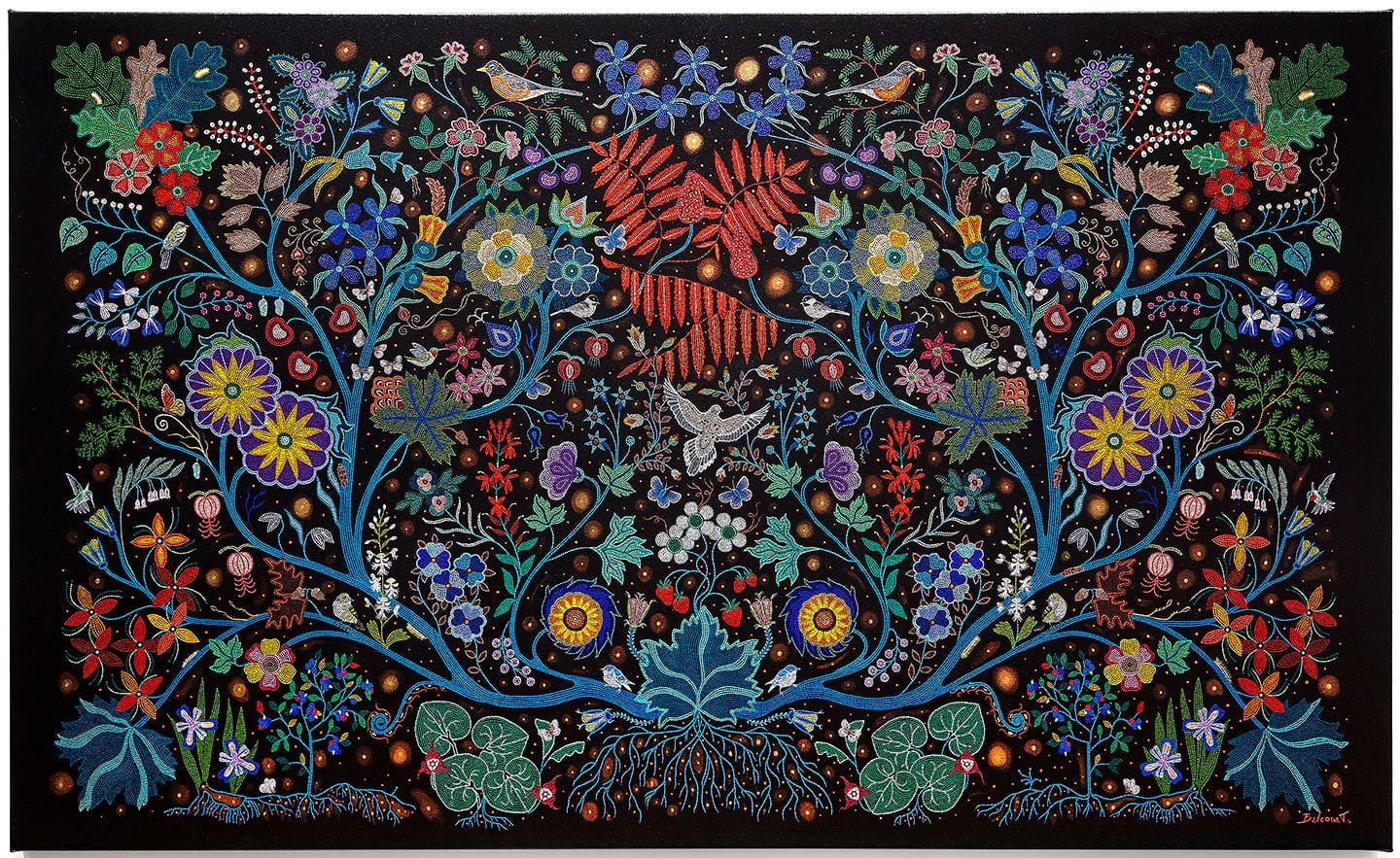
The United States’ sovereignty is demonstrated by armed guards at an arbitrary border. The specific mythology of this country’s “freedom” is built on the illusion of agency imparted by independence, self-reliance, and hard work (why’s it always gotta be hard?). None of that has anything to do with what actually makes us free. Our freedom is predicated on our participation in mutually caring communities. That is the configuration that can actually ensure our needs are met. A set of policies dictated by a court or legislative body can’t ratify our freedom–especially while the cultural conditions surrounding those policies eschew accountability for our collective wellbeing. “Bread is freedom and freedom is bread,” as Lucy Parsons said back in 1905. So long as residents of this nation are underfed, unhoused, overworked, and struggling to give and receive care, none of us are free.
- Who taught you to be cared for?
- When you feel free in your body, where are you?
- What’s something you love to do but would not do alone? Whom do you invite to do it with you?
Visions of the future we want
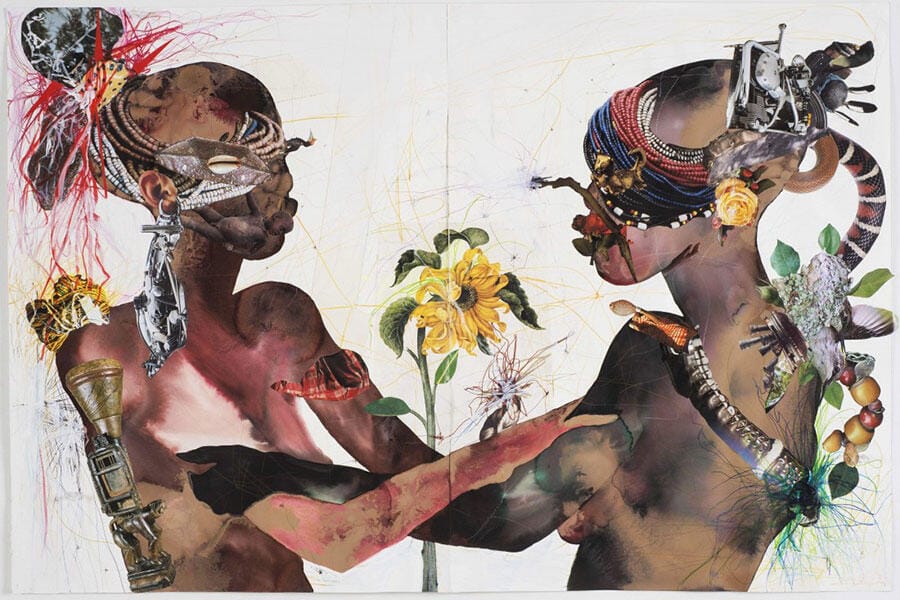
While my brain knows “the nation” is a modern invention, its omnipresence makes it hard to grasp what could exist outside of it. I can easily conjure images of a climate apocalypse. (The prepper in me has ensured I’m actually pretty ready for complete societal collapse.) But a society that functions without empires and nations—without racial capitalism or any of the oppressive containers we’ve been made to call home—is sometimes harder to see. Especially without tripping into an overly-nostalgic fantasy of a tech-free, pre-industrial existence.
What if we turned away from the work of making the United States better, and toward a future for our (co)existence on the American continent that is worthy of our aspirations? The ideals we most value from the American project are neither bound nor unique to this national structure. Much of what we love and respect about the U.S. system of governance was inspired by the Haudenosaunee Confederacy’s participatory democracy. Which is to say, these ideals are portable. Is there something better we could port them into?
- What would it mean for the people in this country to turn toward the village, toward the earth? Toward matriarchy?
- What if the community we imagine wasn’t defined by geopolitical borders? What else could contour it?
- Imagine a child living 250 years in the future. What do you hope their life feels like?
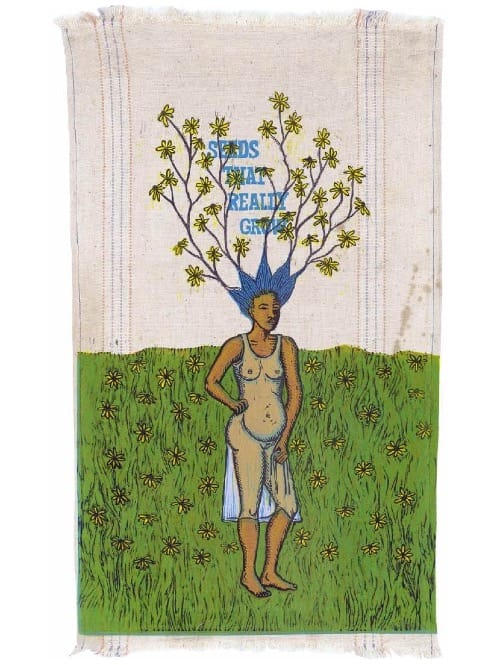
Speculative fiction is one of the most powerful tools we have to break through the mental walls we’ve inherited from our national culture, identity, and mythology. Fiction is not an escape from reality, but a critical way to shape it. In the words of Lucille Clifton, “we cannot create what we cannot imagine.”
I’ll leave you with some visions of the future that have fed my imagination recently:
- Psalm of the Wild-Built and Prayer for the Crown-Shy by Becky Chambers
- How Long ‘til Black Future Month? by N.K. Jemisin
- The Dispossessed by Ursula K. Le Guin
- Sky Full of Elephants by Cebo Campbell
If you want to dig deeper into these questions and find the practices that lead you toward liberatory answers, join us for a Freedom’s Revival workshop or plan one for your people.
[^1] Benedict Anderson, Imagined Communities: Reflections on the Origin and Spread of Nationalism, page 6.
[^2] Robin Wall Kimmerer, The Serviceberry: Abundance and Reciprocity in the Natural World, page 9.
[^3] Plato, Republic, trans. G. M. A. Grube, rev. C. D. C. Reeve, Book II.
Current inspiration
This clap back.
These expressions of pragmatic faith.
Member discussion