In honor of care
Hi friends,
The season may be changing—here in the Bay, kids are going back to school, flora is getting crispy, and the mornings for us early risers are beginning to dim—but America remains in a deepening winter of authoritarianism, economic upheaval, and climate disaster. With so much terror and cruelty presently taking place across the country and grabbing our attention from our screens, it’s a challenge to keep at least one eye looking toward any kind of future, much less a liberated one.
But it’s in times of crisis that our future imagining and building is essential, and that we are determined and rigorous in it. Imagining a liberated future and practicing it now allows us to create the micro-infrastructure we need to survive today’s collapsing macro-context.
Read on for some pathways into that rigor.
A note from Mia
I have been traveling more than usual this year–New Orleans, Aspen, Philly, Gettysburg, New York–and in all of these places, I have engaged with people around their experiences of freedom and unfreedom. The subject of care comes up often—though, not necessarily as a liberating force. People (particularly women, particularly Black and brown women) often described the act of caregiving as a burden—a burden they sometimes imagine being liberated from in their fantasy of the future.
The folks I met are caring for their children, their parents, sick spouses, and disabled loved ones—and they express deep love for the people they care for, and a reverence for the honor of caregiving. But they also describe the isolation and overwhelm they experience, the exhaustion they feel from the relentlessness of providing so much of what another person needs, and the frustration of navigating services and systems that seem designed to make them give up on getting help.
But when they are able to imagine a future in which they are not caregiving alone and in which they themselves are being cared for, their dreaming about possible futures shifts. Because the problem isn’t the caregiving itself. It’s the isolation, invisibility, depletion, and lack of support—from community and professionals —they experience alongside it. The lift is too heavy for one person.*

What if care were commonplace?
What if we all felt a joyful duty to care for each other with whatever skills and capacities we have?
What if care traveled along overlapping and connected tributaries in a continuous cycle, so that we each gave what we could and received what we needed?
This kind of mutuality is the heart of liberation. Care is the organizing principle of a liberated world.
*(It reminds me of that episode of The Pitt—spoiler alert—where an adult daughter brings her mom, whom she cares for, into the hospital for something and then disappears. The staff start thinking that she abandoned her mom because she’s overwhelmed from caregiving, but it turns out she fell asleep in her car.)
Upcoming events
We get free together — Join us for an immersive virtual experience!
Register now to save your spot for our 90-minute online Freedom’s Revival Workshop. This immersive online experience (re)introduces you to our interconnected freedom framework in ways that shift your thinking, feeling, and being. The workshop will be held by skilled facilitators, Mariah Rakine-Landers and Sarah Crowell.
What we’ve been up to
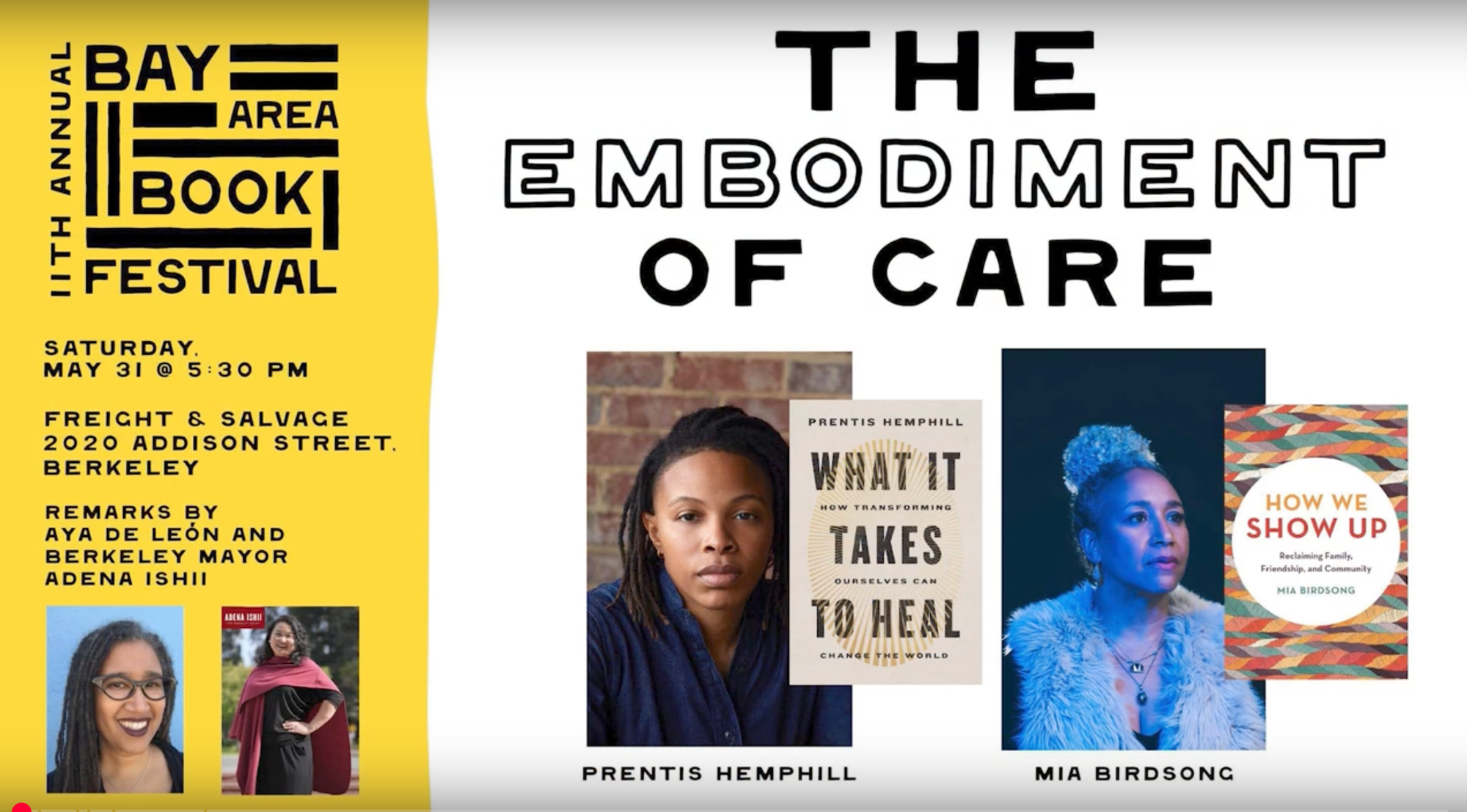
Prentis Hempill and Mia Birdsong talk The Embodiment of Care
A conversation between Mia and Prentis Hempill (therapist, educator, activist, and author of What It Takes To Heal: How Transforming Ourselves Can Change the World) held at the Bay Area Book Festival this past May.
“What would it be like to live in a world where my joy was just joy?”Some provocations from Mia, shared with the Colored Girls Liberation Lab last month, on pursuing the world beyond the one demanding resistance today. Joy may be “resistance” in context of oppression, but what happens if we think beyond that context?

Current inspiration
Protect workers from ICE
Workplaces have a responsibility to care for and protect workers. Build a Fourth Amendment Workplace provides resources to prepare workplaces to protect employees and deter unconstitutional searches and seizures.
I Randomly Decided To Pay Off A School’s Lunch Debt. Then Something Incredible Happened.
An earnest reckoning with the tensions that can emerge between short-term, concrete action and the pursuit of long-term vision. “What if paying off a specific child’s lunch debt today doesn’t preclude advocating for a complete structural overhaul tomorrow? What if the emotional resonance of specific, concrete actions is precisely what builds the coalition necessary for systemic change?”
Member discussion