
Rethinking pragmatism, committing to possibility
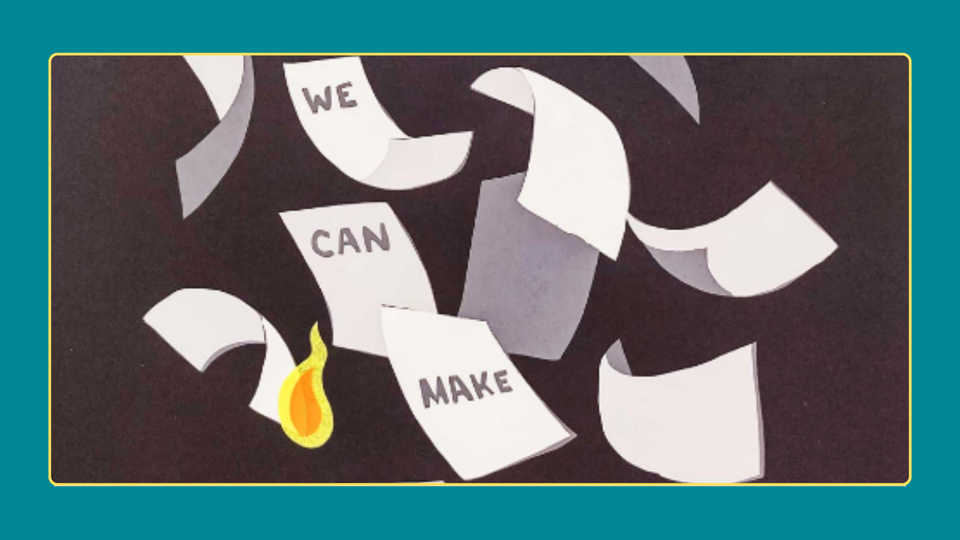
Hi friends, Welcome back! To this newsletter, longer days, the majestic blossom of spring (in this part of the world), and young voices of resistance demanding our urgent, moral attention.
A note from Mia
As I write this, there is a case in front of the Supreme Court considering whether or not cities can ban people from sleeping outside when there’s no shelter available. It is essentially a ban on being homeless. This case is yet another illustration of the distinction between law and morality. But it also speaks to a spectacular lack of imagination when it comes to addressing issues that are fundamental to creating a just society.
Homelessness has known, straightforward solutions. It is one of the many challenges we wrestle with that we actually know how to solve. As my friend and colleague Natalie Foster explains in her new book, The Guarantee:
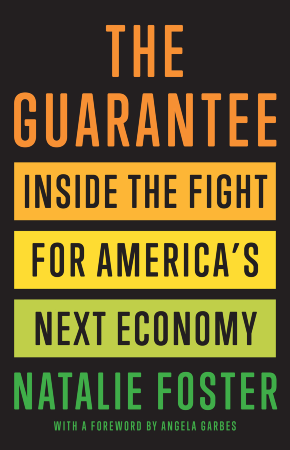
“Over the last dozen years, I’ve been tracking progress toward a whole set of Guarantees: for health care, a home, an income floor, dignified work, family care, college, and an endowment at birth held in trust through adulthood… Every arena I discuss—whether housing, higher education, health care, or something else—has hundreds of policy papers behind it, and hundreds of ideas for how to finance and implement it.”
The how is not our issue. What prevents us from enacting change is a lack of belief. On the one hand, there are those who don’t believe everyone deserves things like housing, healthcare, and adequate income. It’s easy to find open expression of that perspective on the conservative side of the political spectrum. But America’s deeply rooted Protestant work ethic and individualism mean it shows up on the left as well. (I explore this in my 2020 podcast on guaranteed income, More Than Enough.
But what I see more of on the left side of our political spectrum is a belief that the solutions are too much to ask for—that a just, liberated world is an unrealistic pipe dream. For example, in 2018, I was deep in the research for More Than Enough and invited to give a talk at Stanford University. While there are currently more than 100 Guaranteed Income programs across the country now, at the time it was just becoming a subject of consideration. The Stanford audience was smart, thoughtful, and liberal—even progressive. But some of the questions during the Q&A were frustratingly limited.

"But what about education?” asked one audience member. “But what about public transportation?” asked another. They were expressing a genuine disbelief in our ability to provide the residents of this wealthy country with necessities. As if advocating for basic income means we stop advocating for other things, and we need to choose which necessity is worth our energy. I got fed up with their hand wringing and asked, “Who told you we can only have one thing?”
This limited thinking is not at all uncommon. Among progressives of many backgrounds and identities, ideas like guaranteed income or housing or universal healthcare are dismissed as naive, or unrealistic—hardly worth articulating, much less working to achieve.
Why do we think it’s too bold to believe we can provide people with food, shelter, healthcare, clean water, transportation, and education? Why have we accepted the story that tells us we can’t have what we need to live? That we can’t have guaranteed income and resource public schools. That we can’t protect the environment and ensure everyone gets fed. We have become so acculturated to a fallacy of public resource scarcity, manufactured and amplified by our political theater, that genuinely progressive people and advocates are hesitant or straight up unwilling to demand and expect necessities. Only this one or that one, never both (and don’t even think about all). We’ve normalized lack to such a degree that enough is somehow unserious.
I recognize this thinking is borne of a perceived pragmatism: if the choice is between a little and none, we should fight for a little. But that approach has become an endpoint instead of a step along the way. It further reduces the space we claim in our discourse for human rights and collective justice. It constrains the visions of our movements, weakens our negotiating power, and, perhaps most of all, erodes our faith that another world is possible.
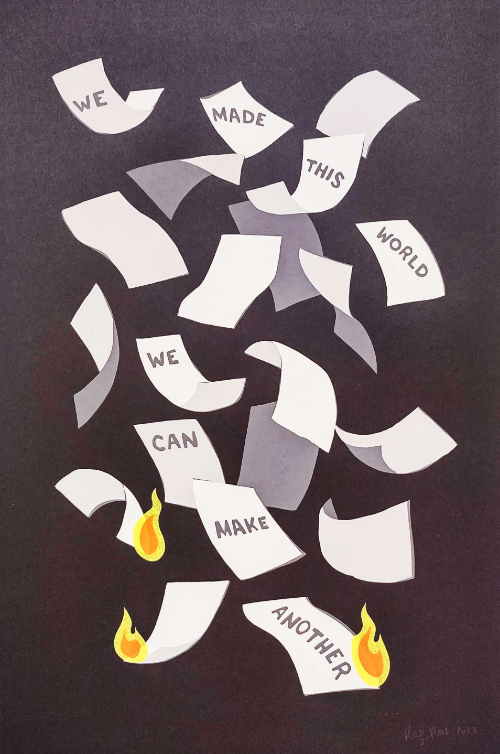
Now, I’m not saying pragmatism has no place. But I think we need to reconsider what we deem to be pragmatic. There is nothing pragmatic about forcing people to make a life without the things they need to live. There is nothing pragmatic about letting a handful of people deny our collective wellbeing because they want to hoard more resources than they could ever utilize. There is nothing pragmatic about laying waste to the land, air, and water that sustains all life. Land stewardship is pragmatic. Collective care is pragmatic. Justice is pragmatic. Liberation is pragmatic.
We can simultaneously have faith that a better world is possible while being pragmatic about the world we live in. This is why the concept of “pragmatic faith,” described in Next River’s field guide, Freedom’s Revival: Research from the Headwaters of Liberation is useful.
Pragmatic faith is about holding and believing in our vision of an abundant, liberated future while also attending to the material conditions of today. It rejects the message that the issues we face are too complex to solve and that existing systems are too enduring to be re-imagined or changed.
What if instead of rejecting a vision, policy, or effort based on pragmatism, we got curious? What if we asked ourselves:
- Where is that resistance coming from? How is it serving me?
- Does it align with my worldview? Affirm my identity? Maintain my self-perception—as smart, or worldly, or grown?
- Is it protecting me from disappointment? Or ridicule? Buffering me from fear or shame?
- Where, or in what conditions, can my imagination be expansive? Why?
- What tools do I need to stoke my faith?
- What would I have to let go of to believe in a better world?
- How would I have to grieve what I let go of?
- What do I claim by doing so?
As Lorraine Hansberry said, “We can impose beauty on our future.” To do so, we must find beauty (and imagination, and possibility, and faith) within ourselves. Give it room to grow within our hearts, minds, and spirits so it can give shape to the world.
In other news…
Mia has been selected by Pop Culture Collaborative to be in their 2024 cohort of Pluralist Visionaries, through the Becoming America Fund. She’s in good company, with Alok Vaid-Menon, adrienne maree brown, and Sarah Jones.

Current inspiration
If you’re reading this, you have now entered a Michael Hobbes Fan Club. Hobbes is a journalist who’s hosted several podcasts over the years-–currently, If Books Could Kill with Peter Shamshiri and Maintenance Phase with Aubrey Gordon, and previously, You’re Wrong About with Sarah Marshall.
He and his co-hosts take a cultural phenomenon, like a popular social science book, health trend, or accepted historical narrative, and dissect it. In doing so, they reveal the specious arguments, hypocritical conclusions, and obscured misinformation that proliferate in our collective discourse.
The episodes are funny (with some snark) and offer meticulous analysis that exposes the many insidious consequences of our information ecosystem at play in our psychological, social, and cultural lives. They remind us to interrogate what we believe and why. They also demonstrate the sheer amount of time and energy it takes to stay discerning about the information flow.
The work of being thoughtful, informed consumers of media has long been a topic of discourse. But given the state of journalism and the inexhaustible spew of unverified content from the internet, that labor is inextricable from our abilities to think and act as moral, intellectual, and political beings.
To do that work well–with vigilance–requires more capacity and effort than most of us have to spare. We’re grateful to Michael Hobbes and his co-hosts for doing some of the heavy lifting.


Image ID: Link preview for 'If Books Could Kill Pod: The airport bestsellers that captured our hearts and ruined our minds.' Thumbnail shows the podcast's bold white title text on a blue diagonal band over a pink-to-yellow gradient background.
 0
0
Image ID: Link preview for the podcast 'Maintenance Phase.' Thumbnail shows an illustrated pink apple and blue pear, outlined in black, on a light gray background.
As an aside, Aubrey Gordon, Hobbes’ Maintenance Phase cohost, is the subject of a new documentary, “Your Fat Friend.” Shot over six years, it chronicles Gordon’s rise from unknown blogger to best-selling author and podcaster. Her work aims to spark, “A paradigm shift in the way that we view fat people and the fat on our own bodies.” You can watch it here for free until June 9th.


Image ID: Link preview for 'Your Fat Friend,' watch on Jolt.Film. Thumbnail shows a woman with a bob haircut wearing a fuzzy white textured coat, hands clasped, against a purple and pink gradient background.
Member discussion